Rubber Band Ligation
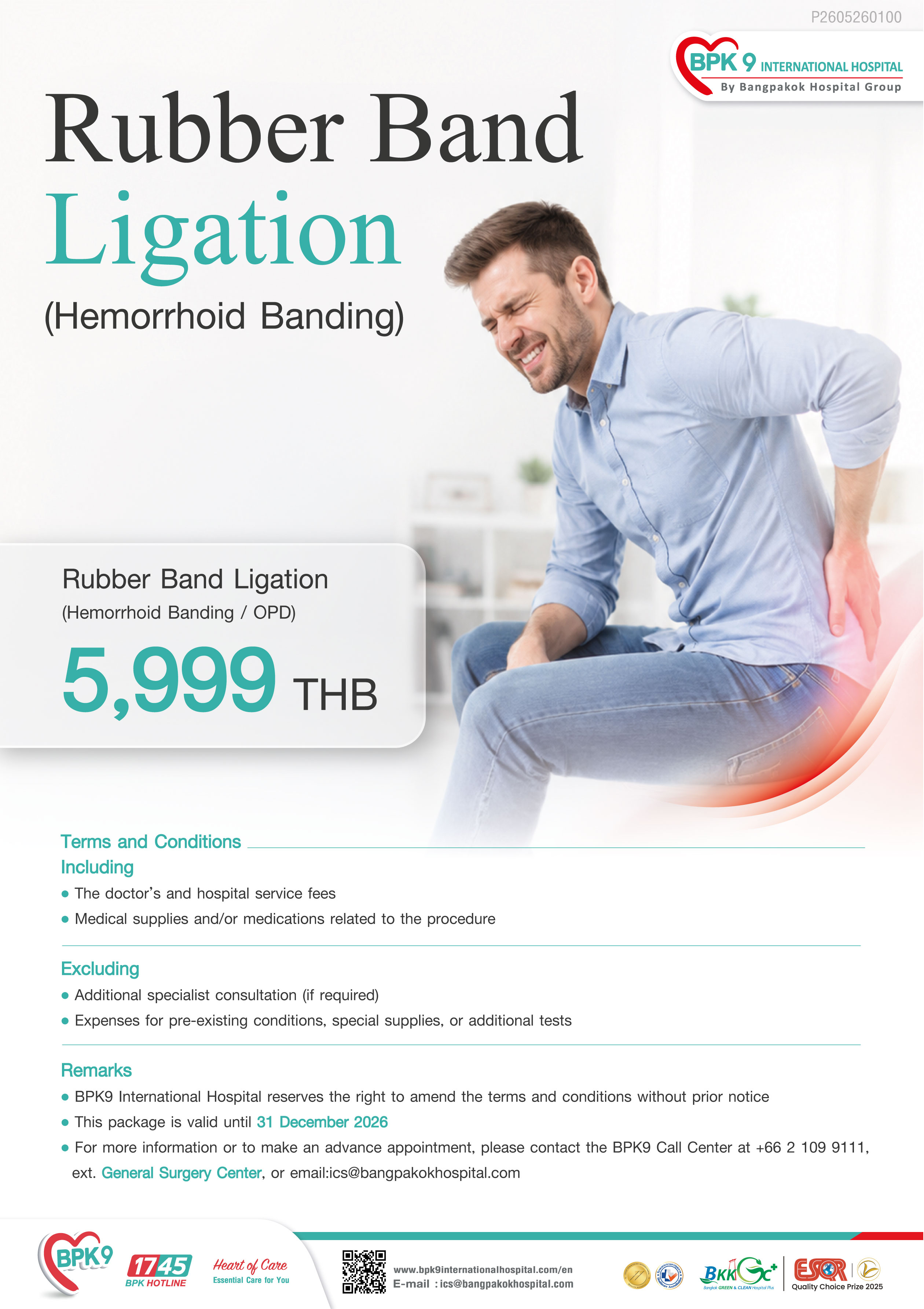
Rubber Band Ligation: A Simple and Effective Treatment for Hemorrhoids
Hemorrhoids, also known as piles, are a common condition that can cause discomfort, itching, pain, and bleeding during bowel movements. At BPK9 International Hospital, we provide safe and minimally invasive treatment options to help patients return to daily life comfortably and confidently. One of the most effective non-surgical treatments for internal hemorrhoids is Rubber Band Ligation (RBL).
What is Rubber Band Ligation?
Rubber Band Ligation is a minimally invasive procedure used to treat internal hemorrhoids. During the procedure, a small rubber band is carefully placed around the base of the hemorrhoid inside the rectum. This band cuts off the blood supply to the hemorrhoid, causing it to shrink, dry up, and naturally fall off within a few days.
The procedure is quick, effective, and usually performed on an outpatient basis, meaning patients can return home the same day.
Who Can Benefit from Rubber Band Ligation?
Rubber Band Ligation is commonly recommended for patients experiencing:
- Bleeding during bowel movements
- Prolapsed hemorrhoids (hemorrhoids that protrude outside the anus)
- Itching or irritation around the anal area
- Mild to moderate internal hemorrhoids
- Discomfort while sitting or during daily activities
It is most effective for Grade I, II, and some Grade III internal hemorrhoids.
Advantages of Rubber Band Ligation
Rubber Band Ligation is widely preferred because it offers several benefits:
- Minimally Invasive
No major surgery or large incision is required.
- Quick Procedure
The treatment usually takes only a few minutes.
- Minimal Downtime
Most patients can return to normal activities within 24 hours.
- Effective Results
It has a high success rate for treating internal hemorrhoids.
- Less Pain Compared to Surgery
Because the treated area has fewer pain-sensitive nerves, discomfort is generally mild.
What Happens During the Procedure?
The doctor uses a specialized instrument called a “ligator” to place a tiny rubber band around the hemorrhoid tissue. Patients may feel slight pressure or fullness, but the procedure is generally well-tolerated.
In some cases, more than one hemorrhoid may require treatment, which can be done over multiple sessions depending on the patient’s condition.
Recovery and Aftercare
After the procedure, patients may experience mild discomfort or a sensation of fullness for a short period. Most symptoms improve quickly.
Patients are usually advised to:
- Drink plenty of water
- Eat high-fiber foods
- Avoid straining during bowel movements
- Maintain good bowel habits
- Follow prescribed medications if needed
The hemorrhoid tissue typically falls off naturally within several days.
When Should You See a Doctor?
Persistent rectal bleeding, pain, or discomfort should not be ignored. While hemorrhoids are common, similar symptoms can also be associated with other gastrointestinal conditions. Early evaluation by a specialist helps ensure accurate diagnosis and appropriate treatment.
Heart of Care, Essential Care for You